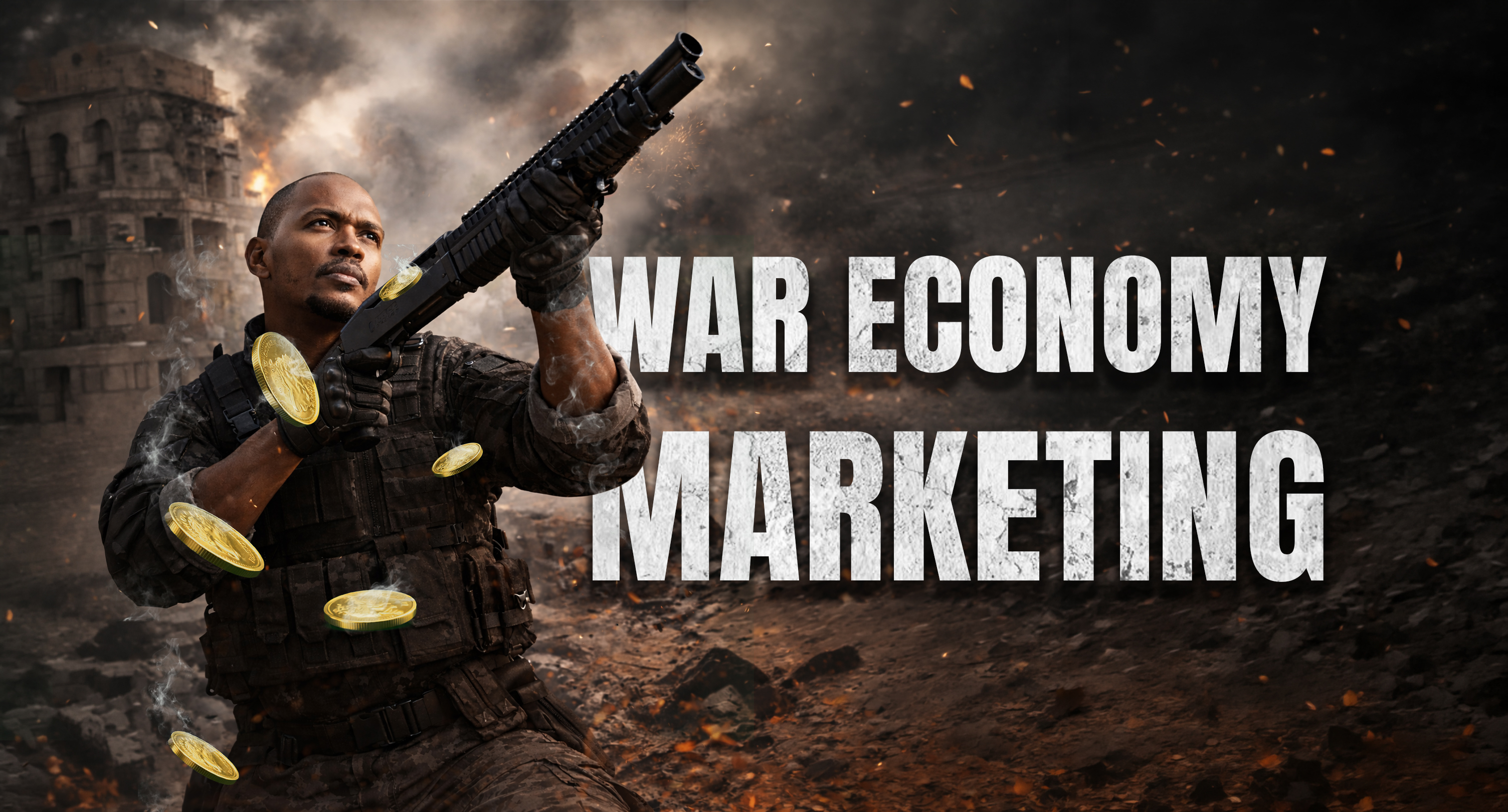
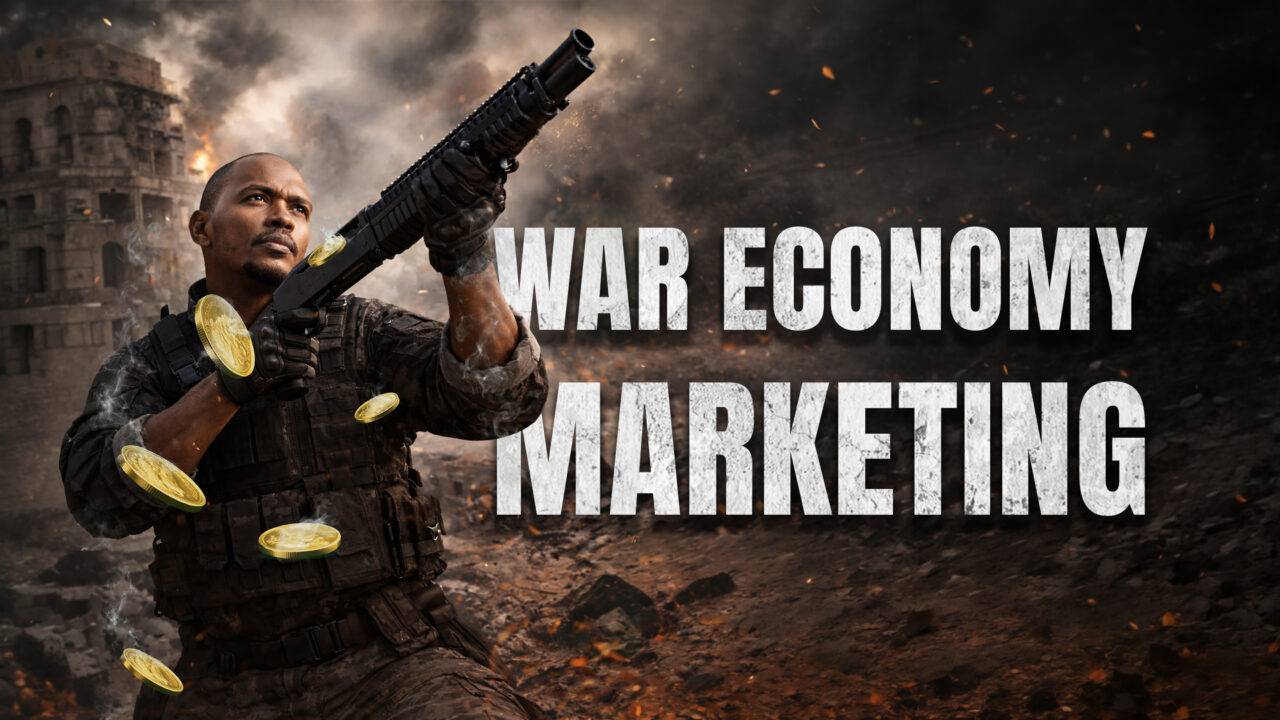
In times like the ones we are living in today, marketing is no longer just about selling a product or a service. It has become directly connected to the political and economic realities surrounding us. One of the most significant phenomena we are currently witnessing in the region is the war economy.
The conflicts taking place in areas such as Gaza, Sudan, and the Red Sea region are not only reshaping the political landscape; they are also creating an entirely new economic reality. In the midst of these crises, new markets emerge, new needs arise, and opportunities appear that are completely different from traditional markets.
Let’s be clear: war is a humanitarian catastrophe before anything else. But at the same time, the economy does not stop — it often simply changes its form.
Within a war economy, certain sectors grow rapidly because they serve urgent and critical needs. For example:
Logistics companies experience extremely high demand, as transporting supplies, humanitarian aid, or even commercial goods requires new and rapid solutions in unstable areas.
Cybersecurity has also become a fundamental element, because modern conflicts are no longer fought only on the ground — they also take place in the digital space. Institutions, governments, and even private companies need to protect their data and digital infrastructure.
The media and communications sector also plays a major role. In times of war, the narrative can be just as important as the event itself. Media institutions, production companies, and content creators often find themselves at the center of the information battle.
Humanitarian organizations are also deeply involved. As crises intensify, the need grows for effective communication with the world, fundraising efforts, and delivering humanitarian messages in a compelling way. This is where humanitarian marketing, built on trust and transparency, becomes essential.
However, the impact does not stop at these sectors alone.
Conflicts disrupt global supply chains, which directly affects e-commerce. Many companies are forced to rethink their distribution methods, product sourcing, and even their target markets.
In other words, marketing in a war economy is not only about promotion — it is about adaptation.
The companies that succeed under these conditions are the ones capable of quickly reading reality and understanding how to adjust their strategies according to geopolitical and economic shifts.
The real question for marketers today is no longer: How do I sell more?
The more important question has become:
How do I understand a rapidly changing world — and build a marketing strategy that moves with it, not against it?
In a region like the Middle East, major transformations often create enormous challenges — but they also open doors to opportunities that did not previously exist.
Aliquam eros justo, posuere loborti viverra laoreet matti ullamcorper posuere viverra .Aliquam eros justo, posuere lobortis, viverra laoreet augue mattis fermentum ullamcorper viverra laoreet nibh Morbi tincidunt nulla .
Showcase your talent with our portfolio
Aliquam eros justo, posuere loborti viverra laoreet matti ullamcorper posuere viverra .Aliquam eros justo, posuere lobortis, viverra laoreet augue mattis fermentum ullamcorper viverra laoreet Aliquam eros Vivamus ultrices euismod mi, ac dapibus nunc dapibus at. Pellentesque suscipit eros et lorem semper, nec laoreet odio viverra. Donec a eros suscipit, tincidunt magna nec, rutrum nibh Morbi tincidunt nulla a risus imperdiet
Ished fact that a reader will be distrol acted bioii the.ished fact th reader will besi distrol ac laoreet Aliquam fact that a reader will be distrol acted Aliquam posuere loborti viverra laoreet challenges and concerns. Use every opportunity to make clear to employees that you support
Picking the right branding agency for your rebranding project is a critical step toward realizing your brand’s full potential. By defining your goals, evaluating experience, checking references imperdiet, vitae tempor erat gravida Phasellus id sapien